

















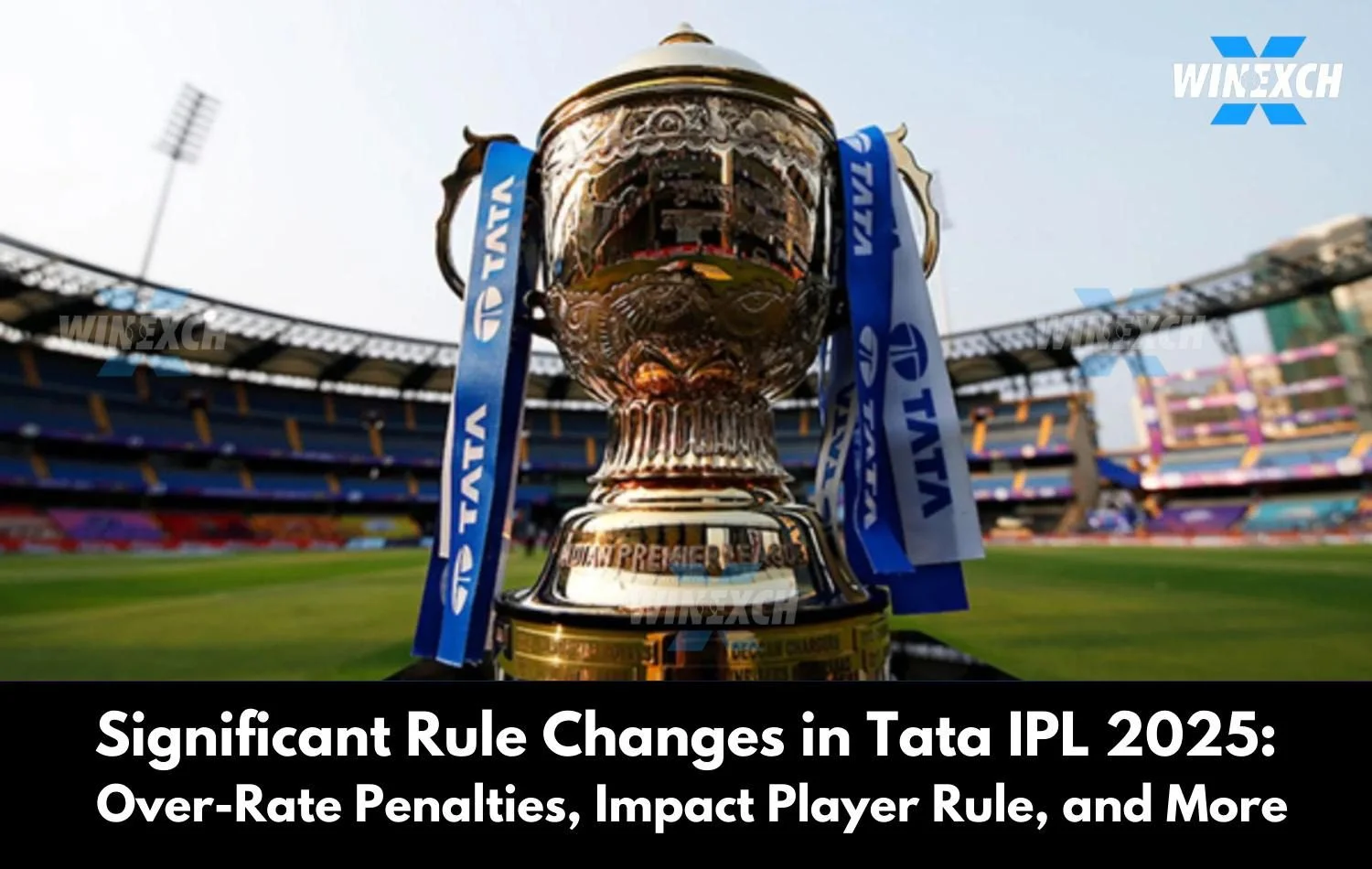
Significant Rule Changes in Tata IPL 2025: Over-Rate Penalties, Impact Player Rule, and More
The Board of Control for Cricket in India (BCCI) has made some significant changes to the playing conditions for Tata IPL 2025. One of the notable changes relates to the system of penalizing captains for over-rate offenses, so that captains cannot be banned from playing in a match. Rather, a system that awards demerit points is now in place. The other significant change is that the much-discussed Impact Player Rule will stay in effect until at least 2027, and changes to Decision Review System (DRS) concerning height and wide-ball will also come into effect. These new changes are set to shape the forthcoming IPL season, affecting the strategies of teams and predictions of IPL matches.
Earlier, slow over-rate offenses would earn captains a match ban which often upset team dynamics. In a recent meeting held in Mumbai on March 20 at the BCCI office, the board conveyed to the ten IPL team captains that a new system would be in place.
BCCI Overhauls Over-Rate Penalties: No More Match Bans for Captains
In such a case, BCCI has equated the new legislation with the Justice of the International Cricket Council (ICC). Now the captains are to be awarded demerit points and fines according to the gravity of the crime. Some important characteristics of this new demerit-point punishment are:
Level 1 Offense:
- Any one-one offense shall be punished by a fine of 25-75% of match fees.
- Demerit points are valid for accumulation for three years.
Level 2 Offense:
- Four demerit points shall be earned directly.
- Further fines may follow in instances of aggravated offenses.
Accumulation of Four Demerit Points –
- The match referee may impose either a fine of 100% or demerit points added by him.
- Should there be an excessive accumulation of demerit points, future applications can lead to a punishment such as a match ban.
Thus this one scheme ensures some accountability for the captain without holding up randomly the changes in the composition of the teams during the tournament itself. This now has major implications on the IPL 2025 match predictions, as captains must carefully weigh their options in managing the dreaded over rate against leading their team.
Impact Player Rule to Continue Until 2027
The Impact Player Rule, which has proven contentious since its introduction in earlier seasons, is here to stay till 2027 or beyond. This rule allows teams to field one player as a substitute during a match, making the selection of teams and strategies far more flexible. It is not without mixed responses, but BCCI has made a decision not to tinker with it till the current IPL cycle ends.
Its continuance implies that teams would have to continue strategizing on player substitutions, which would ultimately affect match-day tactics and the predictability on IPL matches. Turning out to be a boon or bane in terms of competitive balance is still debatable.
Modifications to the Decision Review System (DRS)
A very vital switch for Tata IPL 2025 was the enlargement of its DRS (Decision Review System). In its older version, players could only review the umpiring decisions regarding wides or no-balls that were called. In the new playing conditions, referrals will apply to:
- A no-ball call based on Height.
- A wide adjudged beyond the off stump.
This change is designed to take contentious calls as much as possible and thus improve fairness in decision-making around them. This change will have a huge impact on matches since it can change the outcome of a game at stake, especially in a close match where one review could turn the game.
Removal of Saliva Restriction & Second Ball Introduction
The following modification states that the BCCI has lifted the ban on the use of saliva, a rule that had been in place owing to COVID-19 protocols. While bowlers have been using sweat to maintain the condition of the ball, this could have a beneficial effect on their strategies for swing bowling.
In addition, to reduce the effect of dew, a second ball will now be introduced in the second innings of matches. This is intended so that dew will not hit the bowlers, thus making it difficult to grip the ball, thereby keeping both sides even. A second ball ensures that both sides have equal opportunity to hammer their strategies as per their bowling.
Strategic Implications of These Rule Changes
The above changes to rules in Tata IPL 2025 will change the following team dynamics:
- Captains’ Tactical Approach: With the demerit points in place of match bans, the captain would have to be careful while managing over rates.
- Impact Player Usage: The teams would be looking to sweat more on their substitution use as this rule stays in effect till 2027.
- Increased DRS Reviews: More opportunities for both bowlers and batters to challenge calls by the on-field umpires add the next layer of complexity for IPL match predictions.
- Balanced Playing Conditions: The introduction of a second ball in the second innings makes for a fairer competition so that the lack of dew advantage while chasing would be reduced.
With these rule changes, Tata IPL 2025 will surely be an exciting and challenging season for teams, players, and fans alike.
Conclusion
So, these major rule changes will surely add a different flavor to the Tata IPL 2025, with respect to team strategies and match predictions. With the teams evolving with the new era, it is going to be quite a jam-packed season of tactical fights, nail-biting finishes, and astounding results for all the fans.
FAQs
- What has been an enormous amendment in the Tata IPL 2025 rule?
The amendments are that captains will be no longer given match bans concerning the delay in over-rate offenses. Instead, they will attract three years of demerit points.
- Will the Impact Player Rule prevail in IPL 2025?
Yes, the Impact Player Rule exists as of now, and it will stand in the league at least until the 2027 IPL season. The law affirms that every team can substitute in one player during an ongoing match.
- What are the changes in DRS?
The DRS has been extended to inconsiderate height no-balls and wides outside the off-stump, further to its existing loud outcry for wides and no-balls.
- What are the new penalties concerning over-rates for offenders
Captains will be considered for fines and imposition of demerit points rather than outright match bans. In case he sees a fate of four imposition points, he may be subjected to various penalties, among which comprise additional fines or, in extreme cases, match bans.
- Why was the second ball introduced for the second innings?
The second ball has been to beat the dew; this is when it becomes hard for the bowlers to grip and control in the last phase of the match.