






















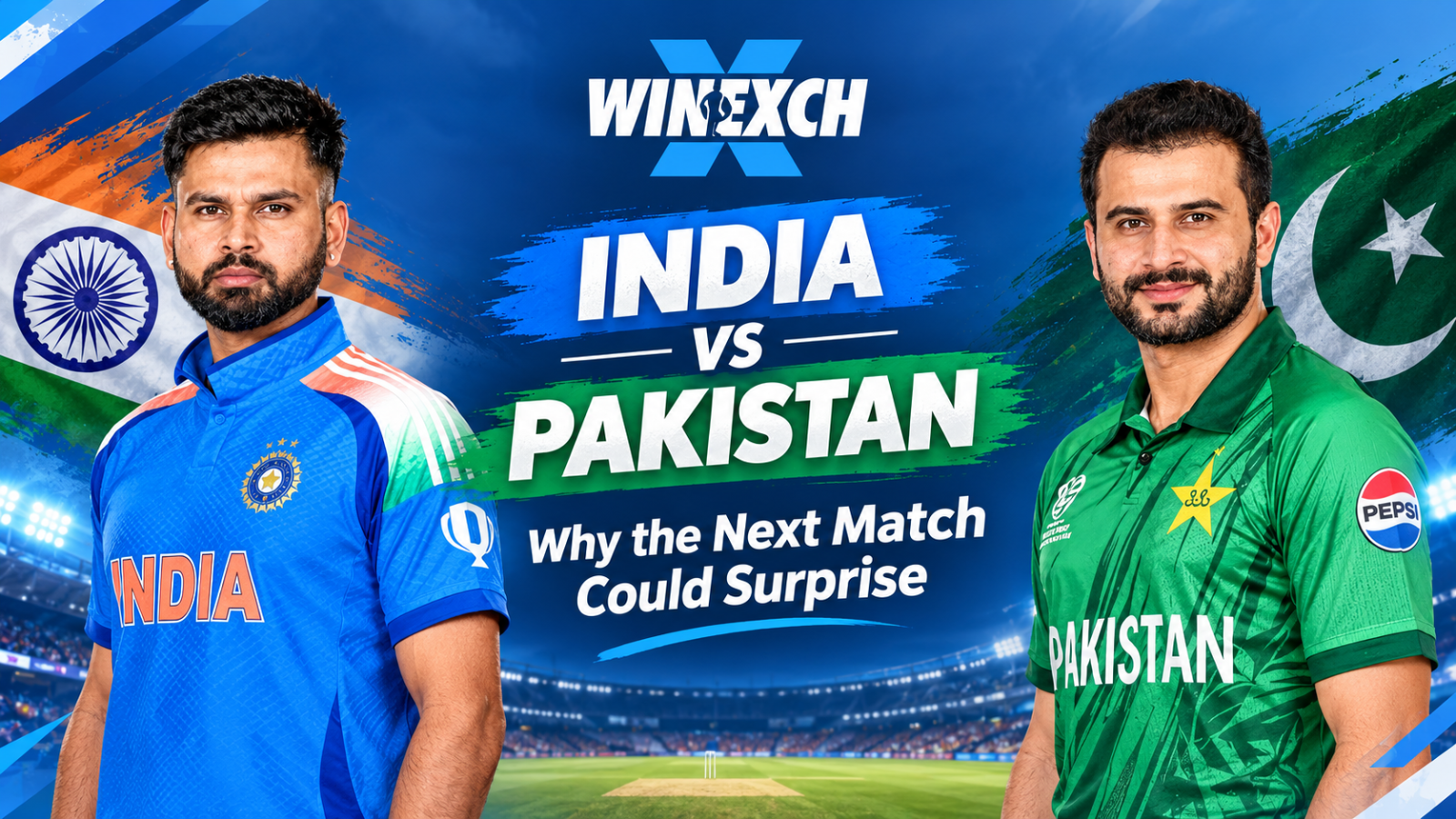
Why the Next India vs Pakistan Match Might Not Go How You Think
Okay, so India won both meetings at the 2026 T20 World Cup, final included, by 96 runs. Big margin. So why does the next India vs Pakistan match still feel wide open? Simple, really; cricket doesn’t let last time’s scorecard write this one. Pitches change. Plans change. One bad over and the whole script flips. If you’re following the buildup on Winexchange, you already get this: it’s the small stuff that ends up mattering, not just the big numbers everyone keeps quoting.
Recent Form Isn’t a Script, It’s Just Context
Form matters, sure, nobody’s saying it doesn’t. But it’s not a crystal ball either. A team can show up red-hot and still get undone in the first hour because the conditions are nothing like what they trained for. And a shaky start? That can wipe out whatever confidence an earlier win gave them, just like that.
A handful of things tend to mess with expectations fast:
- The new ball doing a bit extra early on
- A pitch that plays nothing like it looked at the toss
- A surprise name in the playing eleven
- Pressure that builds out of nowhere after two quick wickets
Honestly, real India vs Pakistan match analysis has to look at what’s actually happening that day. Last time doesn’t count for much once the first ball’s bowled.
One New-Ball Spell Can Change the Whole Mood
The opening overs alone can flip an India vs Pakistan match in minutes, no exaggeration. A batting side walks out looking calm and settled, then two early wickets later, that calm is just… gone.
A new ball swinging around forces caution nobody planned for. That slow start dumps extra work on the middle order. And here’s the thing: one early wicket drags the next guy out sooner than he wanted, and bowlers can smell it. That’s how four or five overs quietly reshape an entire innings.
The Pitch Decides Which Skills Actually Matter
Everyone loves comparing lineups before a ball’s bowled. But honestly, the surface usually decides what matters that day, not the names on the sheet.
| Match Condition | Likely Effect |
| Early movement | New-ball bowlers get more help |
| Slow surface | Clean hitting gets harder |
| Extra bounce | Batters need to adjust fast |
| Dew later on | Bowlers lose grip on the ball |
| Dry conditions | Spin starts to bite |
The India cricket team and the Pakistan cricket team both have to build their plans around what’s actually in front of them, not whatever worked last time around. That’s really why no two India vs Pakistan games feel the same, even with half the same faces on both sides.
A Single Matchup Can Swing a Whole Phase
Overall stats barely tell the full story about a player, if we’re being honest. Sometimes it’s one specific matchup that creates a problem no number saw coming. A batter who destroys pace bowling can still look completely lost against a sharp spinner.
Captains pick up on this fast. They’ll throw on a bowler at exactly the right second or shift the field to choke off easy singles. One matchup won’t decide the match alone, but it’ll quietly run the show for a few overs.
The Middle Overs Move the Game When Nobody’s Watching
Everybody remembers the big stands and the chaos in the final overs. Barely anyone notices the middle overs doing the actual damage. A side can go five overs without losing a wicket and still barely score; and suddenly the required rate’s climbing, and now someone’s forced to take a risk they didn’t want to take yet.
That pressure creates wickets without one jaw-dropping ball. Dot balls pile up quietly, and eventually a batter chucks the plan out the window. Rotating strike ends up mattering just as much as hitting boundaries.
India vs Pakistan: Selection Decide the Match At Times
Who gets picked can shape an IND vs PAK contest way before either captain walks out for the toss. An extra spinner makes sense on a dry track. An extra seamer makes sense where the ball’s moving around. Sometimes a side just loads up on batting because the pitch is screaming “high score.”
None of this is just about picking the biggest names available. Teams juggle batting depth, bowling balance, fitness, and whatever conditions are waiting for them. The final XI deserves just as much attention as the toss.
The Toss Helps, But Execution Decides
Winning the toss helps, no argument there. But it’s never the whole story, not even close. Dew can make chasing way easier on some evenings. Other days, early movement talks a captain into bowling first instead. Either way, the decision only matters if the team actually pulls off the plan that comes after it.
Pressure Shows Up in the India vs Pakistan Moments
People throw the word “pressure” around with this rivalry constantly, and honestly it rarely gets explained properly. Pressure looks like a batter who stops rotating strike, or one who swings at something he should’ve left alone. It’s a bowler abandoning a good length after one boundary too many.
These are the exact moments that send an India vs Pakistan match somewhere nobody saw coming.
Conclusion
Recent form still counts for something; ignoring it would be dense. But every new match starts fresh; new pitch, new conditions, decisions nobody’s made yet. That’s exactly why India vs Pakistan keeps turning out less predictable than the scorecards make it look. None of it is sure on its own. Winexchange concludes that both teams walk in carrying their record and their recent form, sure, but once that first ball’s bowled, the match writes its own story anyway.